
Artificial intelligence is no longer a future concern.
For many organizations, it’s already embedded in daily operations, decision-making processes, and strategic roadmaps.
Yet despite advanced models, capable teams, and growing investment, a familiar pattern keeps repeating:
AI initiatives promise innovation—but often end up creating fear, resistance, or organizational instability.
The real issue is not technological readiness.
It’s how organizations redesign innovation while adopting AI.
When innovation is not intentionally structured, AI doesn’t amplify human capability—it replaces it. And that is where risk begins.
The Real Risk of AI Is Not Automation
Most AI transformation efforts frame risk in technical terms:
- data quality
- model accuracy
- security and compliance
These are real concerns—but they are not the primary reason AI initiatives fail.
The deeper risk lies in unintentional innovation redesign.
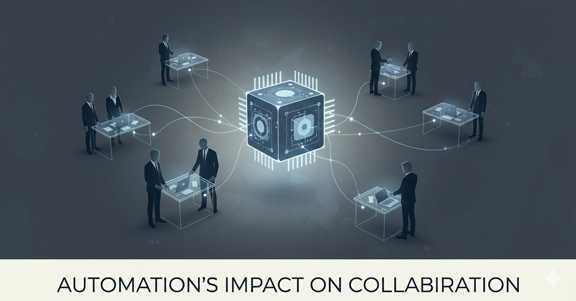
When organizations adopt AI without rethinking how innovation happens, automation quietly takes over areas where creativity, judgment, and institutional knowledge once lived. Over time, roles shrink, trust erodes, and teams begin to resist—not because they oppose AI, but because they feel replaced by it.
AI replaces people only when innovation is not intentionally designed.
Story #1: When AI Replaces People Instead of Capabilities
A large organization launched an ambitious AI program to improve operational efficiency.
The technology worked. Processes were automated. Costs dropped.
But something unexpected happened.
As AI systems took over analytical and coordination tasks, human roles were removed instead of redesigned. Teams lost ownership. Decision-making became opaque. Innovation slowed, even as automation increased.
Within a year:
- employee engagement declined
- cross-team collaboration weakened
- strategic initiatives stalled
The transformation failed—not because the AI was weak, but because the organization unknowingly automated its innovation capacity.
The failure wasn’t technical.
It was architectural.
Innovation Evolves Before Technology Does
Technology evolves fast.
Organizations don’t.
Every organization operates as a system—and systems evolve in patterns. Innovation maturity doesn’t jump overnight; it progresses through stages.
When viewed through an evolutionary lens, successful innovation systems tend to move:
- from rigid roles to adaptive responsibilities
- from manual execution to augmented intelligence
- from replacement to redistribution of capabilities
AI accelerates these shifts—but only if the organization is designed to absorb them.
Without this perspective, AI adoption forces change faster than the system can evolve, creating instability rather than progress.

Where Innovation Actually Happens Inside Organizations
Innovation is often misunderstood as a technical activity.
In reality, it happens across multiple organizational layers.
Innovation shapes:
- how decisions are made
- how value is created
- how teams collaborate
- how roles adapt
When AI enters the organization, it touches all of these layers—not just processes.
If AI is introduced only as an automation tool, it compresses innovation into efficiency gains.
If it is designed as part of the innovation system, it expands creative capacity across the organization.
This distinction is critical.
AI should amplify innovation across multiple dimensions—not collapse it into task automation.
Story #2: When AI Amplifies Human Innovation
Another organization faced similar pressure to adopt AI—but approached it differently.
Instead of asking what can we automate?, leadership asked:
Which human capabilities should AI amplify?
Roles were redesigned rather than removed.
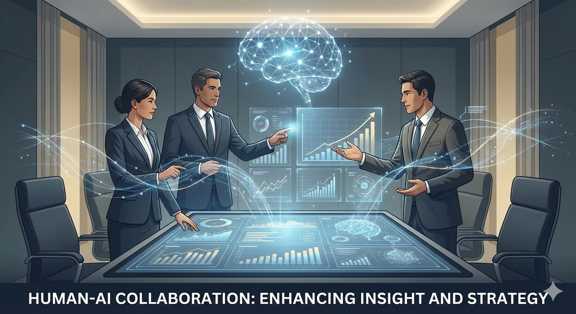
AI agents supported decision-making instead of replacing it.
Teams retained ownership, while AI handled complexity and scale.
The result:
- faster innovation cycles
- higher decision quality
- stronger internal trust
The breakthrough didn’t come from better models.
It came from redesigning innovation itself.
The Missing Piece: A Clear Innovation Framework
Why do some AI transformations strengthen organizations while others destabilize them?
The difference is rarely technology.
It’s the presence—or absence—of a clear innovation framework.
Without a framework:
- AI introduces disruption
- roles erode
- resistance grows
With a framework:
- AI supports evolution
- human creativity is preserved
- risk is systematically reduced
This is where innovation management becomes inseparable from AI adoption.
For organizations exploring this intersection more deeply, approaches such as innovation management with AI agents provide a useful lens for designing collaboration between human teams and intelligent systems:
https://armedbrains.org/innovation-management-ai-agents/
Frameworks don’t slow innovation.
They prevent accidental damage.
Rethinking AI Transformation Before It’s Too Late
If your organization is already on an AI transformation path, it may be time to pause and reflect.
Ask yourself:
- Where are we unintentionally automating innovation instead of enabling it?
- Which human capabilities are being replaced rather than amplified?
- Do we have an innovation architecture—or just a collection of AI tools?
These questions are not about technology choices.
They are about organizational design.
A Subtle Shift in How We Think About AI
At Armed Brains, we are currently exploring how evolutionary innovation patterns can be intentionally combined with strategic innovation principles—not to automate organizations, but to redesign how intelligence evolves inside them.
The goal is not speed at any cost.
It is reducing risk, avoiding cliché transformations, and building a sustainable competitive advantage through thoughtful, human-centered AI-driven innovation.
What Comes Next
AI adoption does not have to be risky—but only if innovation is designed with intention.
If your organization is already moving forward with AI, this may be the right moment to step back and rethink how innovation is being structured—not just automated.
In next week’s article, we’ll explore how to design a practical transformation roadmap that aligns AI, people, and innovation—without increasing organizational risk.
FAQ
Does AI inevitably replace human roles?
No. AI replaces roles only when organizations fail to redesign innovation. When designed intentionally, AI amplifies human capability instead of eliminating it.
Why do AI transformations fail despite strong technology?
Because technology evolves faster than organizational innovation systems. Without a framework, AI disrupts instead of strengthens.
How can organizations reduce AI adoption risk without slowing innovation?
By designing clear innovation frameworks that redefine roles, decision-making, and collaboration before scaling AI.